 Dansk
Dansk
 English
 Deutsch
 Nederlands
 Français

Philosophical Questions Beneath the Night Sky
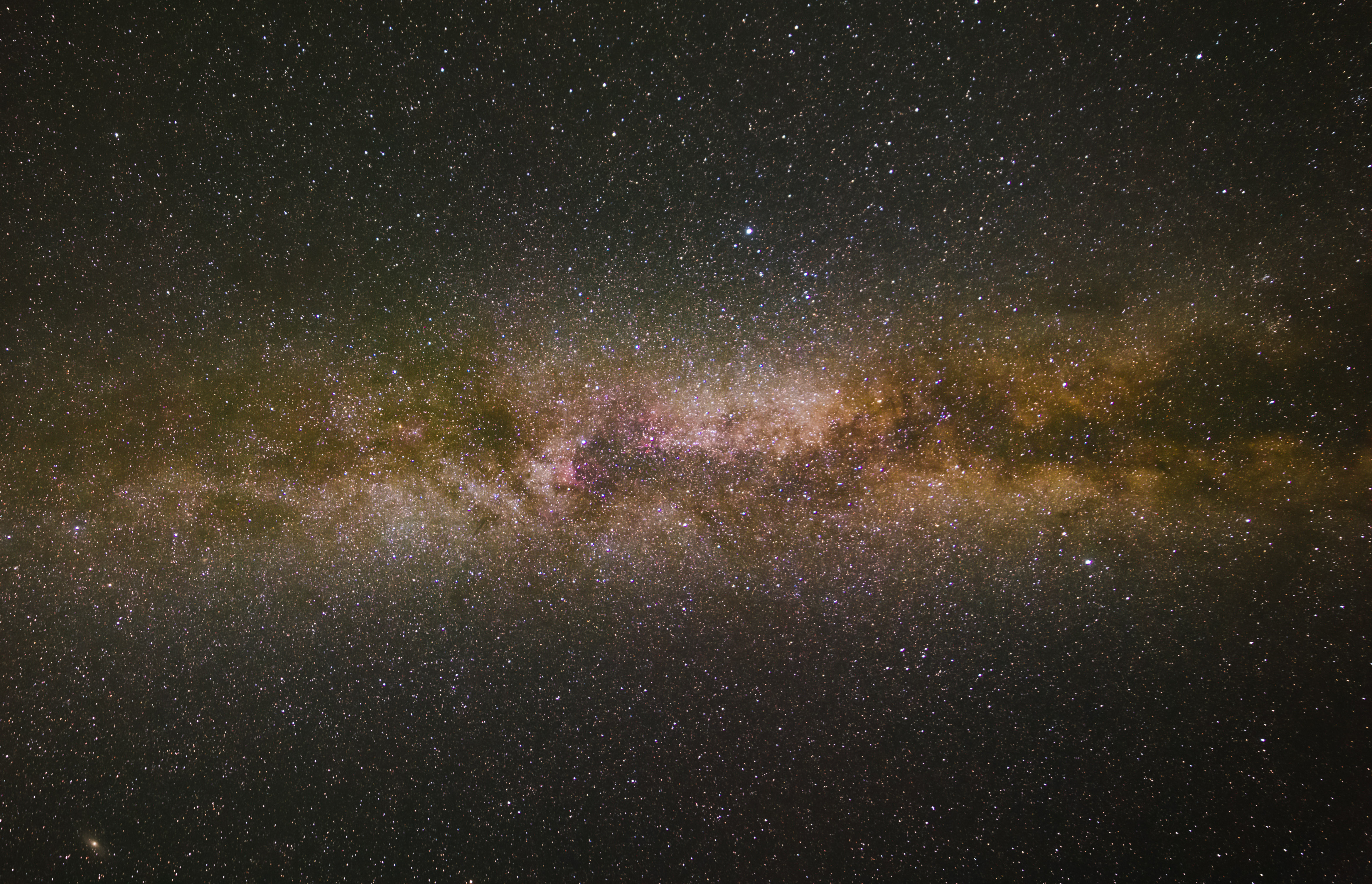
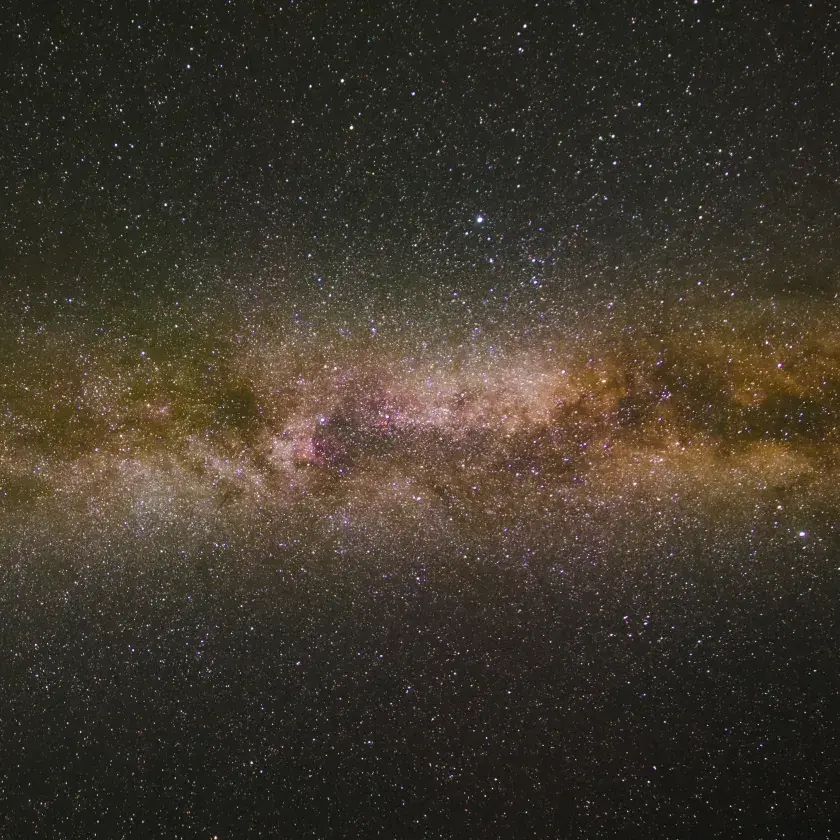
Night changes the world. Streets grow quieter, familiar shapes lose their sharpness, and the sky becomes an open field of darkness scattered with light. In that stillness, looking upward often awakens a strange mixture of awe, humility, and unease. The universe appears vast beyond comprehension, while human life seems brief, fragile, and oddly small. From that contrast arise some of the oldest philosophical questions ever asked: What is the meaning of existence? Why is there something rather than nothing? Does life matter if the cosmos is so immense and indifferent? Is human suffering important in a universe that contains billions of galaxies?
These questions do not always come with clear answers. Yet the experience of feeling small can become deeply valuable. Rather than producing despair, it can lead toward perspective, freedom, gratitude, and a calmer relationship with everyday troubles. Looking into the night sky reminds human beings that life is part of a much larger whole, and that many of the pressures felt in daily life, while real, are not ultimate. A missed deadline, a rude comment, a social embarrassment, or a temporary setback may feel enormous in the moment, but from the scale of the cosmos, such things lose some of their power. That realization can be liberating.
The Awe of Vastness
The most immediate response to the night sky is often awe. Awe is not simple admiration. It is a profound emotional state produced by something so large, so beautiful, or so mysterious that ordinary mental habits briefly fail. The human mind tries to measure the stars, but the numbers quickly become too large to imagine. Distances are expressed in light-years, not miles. Galaxies contain hundreds of billions of stars. The observable universe stretches far beyond what the senses were designed to comprehend. Confronted with that scale, ordinary categories start to dissolve.
Awe can be unsettling because it reveals limitation. Human life is lived through narrow windows of perception, memory, and language. The night sky exposes the narrowness of those windows. It suggests that reality is far greater than personal concerns, private ambitions, or social dramas. Such an experience can feel like standing at the edge of understanding and realizing that the edge is only a small ledge above a bottomless depth.
Yet awe also enlarges the spirit. It opens a space in which the self is no longer the center of everything. That shift may be uncomfortable at first, but it can also be healing. Many forms of anxiety are fed by the assumption that every event has personal significance, that every failure is a catastrophe, and that every judgment from others defines worth. The universe interrupts that illusion. The stars do not care about status, reputation, or performance. Their indifference can be strangely comforting.
The Question of Meaning
One of the most persistent philosophical questions raised by the night sky concerns meaning. If the universe is so immense and so old, and human life is so brief, then what gives life significance? Must meaning come from cosmic importance, or can meaning exist in smaller, local forms?
Some thinkers have answered by searching for a grand purpose built into the structure of reality. Others have concluded that the universe itself offers no meaning at all, and that meaning must be created by human beings through choice, relationship, art, and moral action. The night sky does not settle the issue, but it sharpens it. Standing under the stars, it becomes difficult to believe that individual achievement alone can carry ultimate weight. At the same time, it becomes equally difficult to accept that life is empty simply because it is small.
Meaning may not require cosmic scale. A single conversation can matter. A small act of kindness can matter. A life devoted to honesty, care, and attention can matter. The universe may not announce such meanings with fireworks, yet that does not make them unreal. In fact, the contrast between the vastness of space and the intimacy of human life may make such meanings more precious, not less. A brief life becomes valuable precisely because it is brief.
The Fragility of Human Concerns
Daily life is often filled with concerns that feel overwhelming: financial pressure, work stress, family tension, personal disappointment, health worries, and the endless stream of comparison encouraged by social life. These burdens are not imaginary. Pain hurts, fear unsettles, and uncertainty can be exhausting. Still, a cosmic perspective changes their shape.
From the standpoint of the universe, many problems shrink. A failed presentation, an awkward interaction, or a disagreement that seems unbearable may, in time, be seen as only a small event within a much larger story. This is not a denial of suffering. It is a reordering of scale. Human beings have a habit of magnifying whatever is immediate. The night sky teaches a different habit: to notice that the present moment, however intense, is only one moment among many.
Such perspective can reduce emotional overidentification with temporary difficulties. When every problem is treated as final, life becomes a series of emergencies. When problems are seen as real but finite, resilience becomes possible. The self no longer collapses around each setback. Instead, experience can be held with more spaciousness. This does not erase pain, but it prevents pain from becoming the whole of reality.
Feeling Small as a Source of Freedom
Modern culture often encourages the opposite of humility. It praises constant self-assertion, personal branding, visibility, and achievement. The individual is urged to become exceptional, noticeable, and always productive. Against this pressure, feeling small can be a relief. Insignificance, in the cosmic sense, may actually be freeing.
If no one is the center of the universe, then no one must carry the burden of pretending to be. If human beings are tiny parts of a vast order, then perfection becomes less urgent. Mistakes become easier to forgive. The need to control everything loosens. Comparison loses some of its force. There is less need to perform for an imagined audience of universal significance.
This freedom can extend to moral life as well. When humility replaces self-importance, others become easier to see clearly. Their struggles no longer appear as threats to personal identity. Their successes do not automatically become humiliations. Compassion grows where ego shrinks. Feeling small can make room for generosity.
The Paradox of Insignificance and Value
There is a paradox at the heart of the cosmic perspective. Human beings are tiny, fragile, and short-lived, yet they are capable of thought, wonder, love, and moral choice. In an immense universe, consciousness is astonishing. A creature made of ordinary matter can gaze at the stars and ask what they mean. That fact itself is remarkable.
Insignificance in scale does not imply insignificance in worth. A grain of sand is small, but a human life is not a grain of sand. A person can grieve, hope, remember, create, and care. A universe may be indifferent, but indifference is not the same as meaninglessness. Meaning arises in the encounter between awareness and existence. The fact that the cosmos does not assign obvious purpose does not cancel the depths of lived experience.
Feeling small can therefore lead to a more mature appreciation of value. Instead of demanding that life be eternally important, appreciation can rest in the simple miracle of being alive at all. The stars do not need to confirm worth. Worth can be found in attention, relationship, and presence.
Mortality and the Shape of Life
The night sky also brings mortality into view. Human life lasts only a moment compared with the age of stars and planets. This can provoke fear, but it can also sharpen awareness. Knowing that life is limited often makes it more meaningful. Time becomes precious because it is not infinite.
Without mortality, many choices would never matter. Finite time gives urgency to love, learning, forgiveness, and action. It becomes harder to postpone what truly matters. The awareness of death can strip away triviality. Arguments that once seemed central may reveal themselves as distractions from deeper questions: How should time be spent? What kind of person should be becoming? What deserves commitment?
Under the stars, mortality becomes less like a curse and more like a frame. A framed picture has edges, and the edges help define the image. Human life has edges too. Those edges do not reduce beauty; they create it. The finite life can be precious because it is bounded.
Perspective Without Indifference
There is, however, a danger in cosmic perspective. Feeling small can sometimes slide into emotional detachment, as if nothing matters at all. That conclusion would be a mistake. The lesson of the universe should not be numbness. The point is not to dismiss daily life, but to place it in proportion.
A balanced perspective recognizes that a conflict at work may be minor in the grand scheme, while still being painful and requiring care. A personal failure may be small compared with the universe, yet still deserve attention and repair. The stars do not erase responsibility. Instead, they prevent overreaction and self-importance from taking over.
Such balance is difficult but valuable. It allows both seriousness and lightness. It becomes possible to care deeply without collapsing into panic. Problems can be addressed with energy, but not with the false belief that every event is world-ending. Cosmic humility and practical responsibility can coexist.
The Gift of Slowing Down
Looking into the night sky also encourages slowness. Most of daily life is rushed. Notifications, tasks, deadlines, and obligations fragment attention. The universe moves according to much larger rhythms. Stars burn for millions or billions of years. Planets orbit in patient cycles. Light from distant galaxies may have traveled for eons before reaching human eyes. Such scales make haste look almost absurd.
Slow perspective can reduce the emotional weight of daily disturbances. When life is seen as part of a long continuum, not every disappointment needs instant resolution. Reflection becomes possible. Patience grows. The mind begins to understand that many things unfold gradually, and that some answers arrive only with time.
Slowness also helps attention deepen. The night sky rewards stillness. It cannot be fully appreciated in the same distracted state used for scanning screens or rushing through errands. It asks for presence. In that presence, a person may recover something modern life often erodes: a sense of belonging to reality rather than merely managing it.
Wonder as a Form of Wisdom
Wonder is often treated as a childlike response, but it is also a philosophical virtue. To wonder is to admit not knowing. It is to remain open before mystery rather than pretending to master it. The universe invites wonder because it remains partly hidden no matter how much science reveals. Every answer opens another question.
There is wisdom in accepting mystery. Not everything needs to be solved immediately. Not every discomfort requires an explanation. Some truths are lived more than proved. The night sky teaches this gently. It does not give a lecture. It simply appears, silent and immense, and invites reflection.
Wonder can protect against cynicism. Cynicism shrinks reality into suspicion and control. Wonder enlarges it. A person who can still be amazed by the universe may also be more capable of gratitude, tenderness, and imagination. Such qualities are not trivial. They are forms of wisdom suited to a finite life under a vast sky.
Living Better After Looking Up
The practical benefit of feeling small is not self-erasure, but proportion. When personal troubles are seen within the scale of the universe, emotional life can become steadier. The self stops treating every setback as a verdict. The heart learns to breathe more easily. Relationships may become more generous. Work may become less frantic. Success may feel less inflated, and failure less devastating.
This perspective can also inspire ethical seriousness. If life is brief and rare, then cruelty becomes more pointless, and kindness more precious. If consciousness is a rare event in a vast universe, then every moment of awareness carries weight. The realization of smallness does not lead to nihilism when combined with gratitude. Instead, it may lead to reverence for ordinary life.
A night under the stars can therefore become a lesson in being human. The cosmos reveals limits, but within those limits there is room for meaning, compassion, and joy. Daily problems remain part of life, but they no longer dominate the whole horizon. The universe is larger than any single fear, and that fact can be a source of peace.
What is the meaning of it all?
Looking up at the night sky awakens some of the deepest philosophical questions available to human thought. What is the meaning of existence? Why does consciousness arise at all? How should finite lives be lived beneath an infinite expanse? These questions may never be fully solved, yet they matter because they alter the way life is experienced.
Feeling small before the universe does not have to be frightening. It can be restorative. Insignificance in scale can produce freedom from ego, relief from pressure, and clarity about what truly matters. The vastness above reminds human beings that most daily troubles are temporary, and that many of them are far less important than they feel in the moment. At the same time, the very fact that human beings can ask such questions is extraordinary.
The night sky does not diminish life. It places life in context. And in that context, a quieter, wiser kind of living becomes possible: one marked less by panic and self-importance, and more by humility, gratitude, and wonder.