 Dansk
Dansk
 English
 Deutsch
 Nederlands
 Français


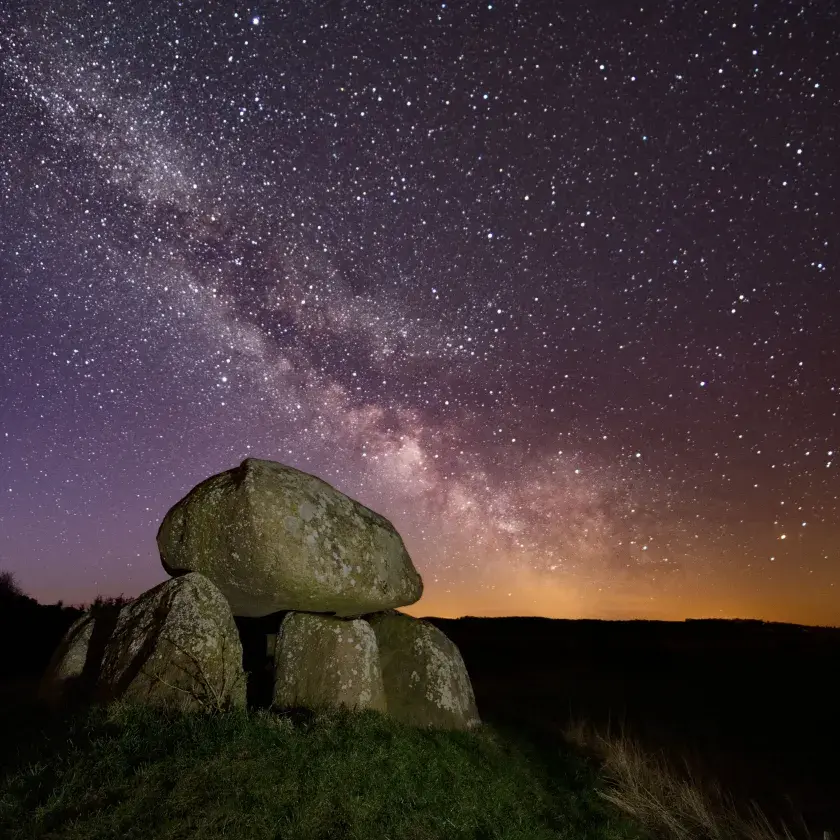
Møn, located in the Baltic sea, represents a vital intersection of natural beauty and deep human history. The island's geographical position fostered unique cultural developments, giving rise to remarkable prehistoric monumental structures and narratives of bygone eras. The archaeological record demonstrates continuous human occupation, from the Stone Age right through to Viking and later periods. This rich tapestry of life and sacrifice is embedded in the island's landscape, particularly visible among its extensive networks of burial mounds and megalithic sites.
Prehistoric Megalithic Monuments
Møn contains some of Denmark’s most beautiful and best-preserved stone dolmens and burial chambers. Despite an age exceeding 5,000 years, close examination and direct entry into these ancient structures remain accessible.
The archaeological standout on Møn is the concentration of *dolmens* (dolmens are types of megalithic structures). These ancient earthworks and burial mounds provide critical insights into the societies that built them, indicating sophisticated knowledge of stonework, social organization, and ceremonial practices. These structures are often monumental in scale, suggesting communal effort and deeply held spiritual significance.
Grønjæger Høj/Grønsalen
The site known as Grønjæger Høj/Grønsalen constitutes one of the most significant archaeological areas. The mounds contain evidence of complex burial rituals, providing material culture that allows historians to reconstruct life patterns of the Neolithic and Bronze Ages. The specific layout and contents of the earthworks suggest function beyond mere internment, possibly serving as community focal points.
Notable Burial Mounds
Beyond Grønjæger Høj, several other significant mounds define the island's historical trajectory:
- Klekkendehøj: This site adds to the understanding of evolving funerary practices across the region. The mound’s considerable antiquity connects it to the earliest settled patterns on the island.
- Sømarkedyssen: Another prominent dolmen, it contributes to the cumulative picture painted by multiple separate yet interconnected monumental sites.
Royal and Early Medieval Sites
The history of Møn extends well past the Bronze Age, encompassing periods associated with early Danish royalty and settlement.
King Asger's Grave
The purported grave of King Asger represents a connection to the island's more warlike mythological and historical periods. Such sites often anchor local folklore and provide physical remnants or markers related to powerful figures of Scandinavian antiquity. These elements intertwine the academic study of archaeology with the preservation of regional oral history.
Cultural Significance and Heritage
The enduring appeal of Møn lies in the deep sense of history permeating its natural environment. The sheer density of preserved megalithic structures necessitates careful study and preservation efforts. These sites are not merely collections of stones; they are physical documents chronicling the evolution of human life in the Baltic region.
The preserved Neolithic cultures demonstrate a profound commitment to permanence, establishing monumental markers that defy the passage of time.
The understanding of Møn's heritage requires viewing the megaliths, the royal grave markers, and the modern island life as part of one continuous narrative. The blend of nature, monumental antiquity, and enduring cultural memory gives Møn its unique standing in Danish history.